Skip to content
If your office is still relying on security technology installed five, ten, or even fifteen years ago, you’re operating with significant vulnerabilities that modern threats easily exploit. Office security system upgrades aren’t just about replacing old cameras with newer models, they represent fundamental transformations in how you protect your people, assets, and data through integrated technology that previous generations of security systems couldn’t imagine.
This comprehensive guide explains why upgrading matters now, what modern systems deliver, and how to plan upgrades that protect your investment for the next decade.
Why Office Security System Upgrades Matter in 2026
The security landscape has transformed dramatically, making upgrades from legacy systems essential rather than optional.
Technology Obsolescence Creates Vulnerabilities
Security systems installed before 2018-2020 typically lack AI capabilities detecting sophisticated threats, cloud connectivity enabling remote management and redundant storage, integration with modern access control and building systems, and cybersecurity protections defending against network attacks targeting IoT devices.
Analog camera systems can’t deliver the resolution, analytics, or remote access that modern IP cameras provide. Proprietary systems from vendors who’ve exited the market leave you stranded without support, parts, or upgrade paths.
Insurance and Compliance Requirements Evolve
Insurance carriers increasingly require modern security standards including minimum camera resolution and coverage, cybersecurity protections for networked systems, documented monitoring and incident response capabilities, and regular system testing and maintenance.
Commercial security audits often reveal that legacy systems no longer meet current insurance requirements, creating potential coverage gaps if incidents occur.
Operational Inefficiencies Cost Money Daily
Old systems create hidden costs through excessive false alarms requiring staff response and generating municipal fines, inability to verify incidents remotely forcing on-site visits, manual processes that integrated systems automate, and inability to generate analytics supporting business decisions.
Modern business security monitoring reduces these inefficiencies while providing capabilities that improve operations beyond security.
Security Threats Become More Sophisticated
Today’s threats include sophisticated burglary operations using counter-surveillance techniques, workplace violence requiring rapid response coordination, cyber-physical attacks targeting both IT networks and physical security systems, and organized retail crime using advanced tactics.
Protecting against modern threats requires professional security systems leveraging the latest technology.
Remote Work and Hybrid Operations Demand Flexibility
Post-pandemic work patterns require remote access security systems enabling security management from anywhere, integration with mobile credentials replacing physical access cards, video verification capabilities reducing unnecessary building visits, and analytics tracking actual space utilization informing real estate decisions.
Legacy on-premises systems lock you to physical locations and limit operational flexibility.
Learn more about commercial security system installation today
Components of Modern Office Security System Upgrades

Comprehensive upgrades transform security from basic intrusion detection to intelligent business platforms.
High-Resolution IP Camera Systems
Modern office security camera systems deliver dramatically enhanced capabilities over analog predecessors.
Resolution and image quality: 4K and higher resolution cameras capture details impossible with older 720p or 1080p systems, license plates, faces, and critical evidence that make or break investigations. Advanced low-light performance using cutting-edge sensors enables clear imaging in near-darkness without external lighting.
AI-powered analytics: Modern cameras include person and vehicle detection, facial recognition capabilities, object classification distinguishing threats from benign activity, behavioral analysis detecting unusual patterns, people counting and occupancy monitoring, heat mapping showing traffic patterns, and perimeter intrusion detection with virtual tripwires.
Network advantages: Networked surveillance cameras enable Power over Ethernet (PoE) simplifying installation, remote configuration and management, seamless integration with other systems, and cloud recording with unlimited storage scaling.
Wireless options: Wireless security cameras eliminate cabling challenges in historic buildings or areas where running wires is impractical, though they require robust WiFi infrastructure.
Advanced Access Control Integration
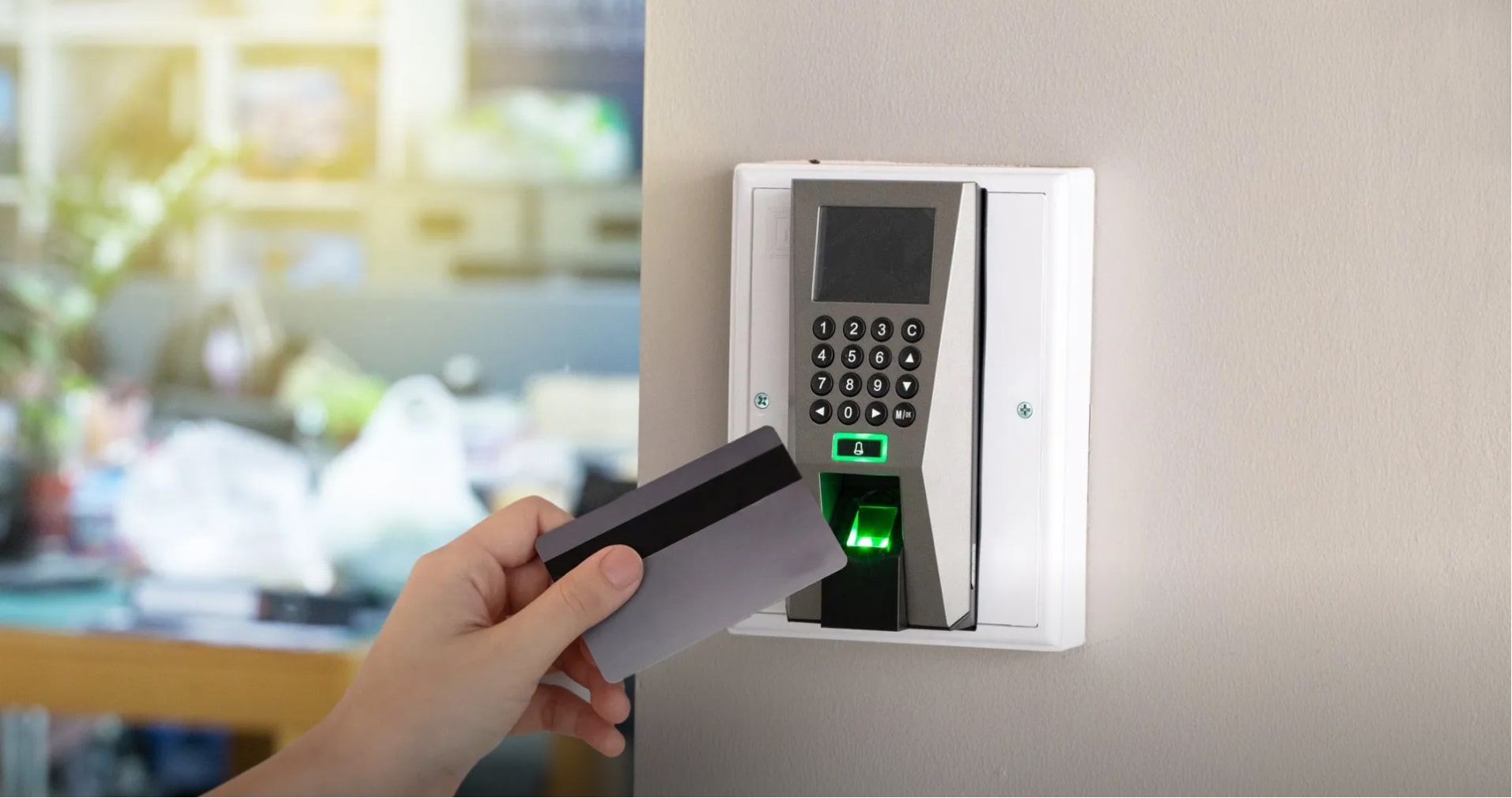
Access control integrated with security cameras creates powerful systems where access events automatically trigger camera recording, suspicious access attempts generate alerts with live video, visitor management integrates with video intercoms, and mobile credentials replace physical cards.
Modern capabilities include:
- Biometric authentication (fingerprint, facial recognition)
- Multi-factor authentication for sensitive areas
- Elevator control restricting floor access
- Integration with HR systems auto-provisioning and deprovisioning credentials
- Temporary credentials for visitors and contractors
- Remote door unlock from security operations center or mobile devices
Intelligent Intrusion Detection
Commercial alarm systems and burglary detection now incorporate glass break detection with audio analytics, PIR motion sensors with pet immunity and analytics reducing false alarms, door and window contacts with tamper detection, environmental sensors (smoke, CO, flood, temperature), and panic buttons with silent alarm capability.
Commercial motion detectors using advanced algorithms distinguish between people, animals, and environmental factors, drastically reducing nuisance alarms.
Integrated Communication Systems
Video intercoms connect entry points to security stations and mobile devices, integrating with access control for remote door release, recording all interactions automatically, enabling two-way communication with visitors, and providing emergency communication capabilities.
Perimeter Security Solutions
Business perimeter security protects grounds and parking areas with long-range cameras covering large areas, thermal imaging detecting intrusion in complete darkness, radar and sensor integration, integration with outdoor lighting systems, and license plate recognition tracking vehicles.
Fire and Life Safety Integration
Commercial fire alarm integration connects security systems with fire detection, enabling security cameras to verify alarm sources, automatic door unlocking during emergencies, emergency communication through intercom systems, and coordinated response protocols.
Emergency Response Systems
Emergency alert systems provide mass notification capabilities, integration with local law enforcement, panic button distribution throughout facilities, lockdown automation securing entire buildings instantly, and two-way communication with emergency responders.
Cloud-Based Management Platforms
Cloud-based security monitoring delivers centralized management of multiple locations, remote access from any device, automatic software updates, unlimited scalable storage, redundant backup preventing data loss, and advanced analytics and reporting.
Cloud platforms enable multi-location business security operations managing dozens or hundreds of offices from a single interface.
Network Infrastructure Upgrades
Modern IP-based security requires robust network infrastructure including dedicated VLANs for security traffic, PoE switches powering cameras and devices, adequate bandwidth for high-resolution video, redundant network paths for critical systems, and cybersecurity protections including firewalls and encryption.
Many upgrades include comprehensive network infrastructure improvements supporting not just security but broader IT operations.
Types of Office Security System Upgrades
Not all upgrades involve complete system replacement. Understanding options helps you invest strategically.
Complete System Replacement
When appropriate: Systems over 10-15 years old using analog or early IP technology, proprietary systems from vendors no longer supporting them, systems incapable of integrating with modern platforms, or situations where piecemeal upgrades cost more than starting fresh.
Investment range: $25,000-$250,000+ depending on office size and complexity for complete business security installation replacing all components with integrated modern systems.
Hybrid Upgrades
When appropriate: Relatively recent systems (5-10 years old) with components worth retaining, budget constraints requiring phased approach, or situations where some infrastructure (cabling, mounts) remains serviceable.
Approach: Replace cameras while retaining compatible recorders, upgrade to network video recorders (NVRs) integrating both legacy analog and new IP cameras, add AI analytics software to existing camera infrastructure, or integrate legacy access control with new management platforms.
Investment range: $10,000-$100,000 depending on scope.
Software and Analytics Upgrades
When appropriate: Hardware remains capable but lacks intelligence and integration, existing IP cameras support external analytics, or budget prioritizes functionality over hardware replacement.
Capabilities added: AI analytics platforms analyzing existing camera feeds, video management software (VMS) providing better interface and features, integration platforms connecting disparate security systems, and mobile apps enabling remote access and management.
Investment range: $5,000-$50,000 depending on system size.
Network and Infrastructure Upgrades
When appropriate: Security devices are capable but network can’t support them, adding IP cameras to network designed for analog systems, or implementing cloud-based systems requiring internet bandwidth.
Components: Network switch upgrades supporting PoE and adequate bandwidth, structured cabling improvements, WiFi infrastructure for wireless devices, and internet bandwidth increases.
Investment range: $10,000-$75,000 depending on facility size.
Expansion and Enhancement
When appropriate: Core systems are modern but coverage has gaps, new building areas need protection, or specific capabilities (analytics, perimeter security) need addition.
Typical projects: Adding cameras to previously uncovered areas, implementing perimeter detection systems, adding biometric access control, or deploying emergency communication systems.
Investment range: $5,000-$50,000+ depending on additions.
Office Security System Upgrade Cost
Understanding investment levels helps budget appropriately and evaluate proposals.
| Upgrade Scope | Small Office (1,000-5,000 sq ft) | Medium Office (5,000-20,000 sq ft) | Large Office (20,000-100,000 sq ft) |
| Complete replacement | $15,000 – $75,000 | $50,000 – $250,000 | $200,000 – $1,000,000+ |
| Hybrid upgrade | $7,500 – $35,000 | $25,000 – $125,000 | $100,000 – $500,000+ |
| Camera system only | $5,000 – $25,000 | $20,000 – $100,000 | $75,000 – $400,000+ |
| Access control upgrade | $5,000 – $30,000 | $20,000 – $100,000 | $75,000 – $350,000+ |
| Network infrastructure | $3,000 – $20,000 | $15,000 – $75,000 | $50,000 – $300,000+ |
| Analytics & software | $2,500 – $15,000 | $10,000 – $50,000 | $40,000 – $200,000+ |
Costs vary based on specific requirements, technology selections, facility complexity, and integration scope. Professional security system setup includes design, equipment, installation, configuration, testing, training, and documentation.
Planning Your Office Security System Upgrade
Strategic planning ensures upgrades deliver maximum value and minimize disruption.
Step 1: Security Assessment and Audit
Engage commercial security audit services evaluating current system capabilities and limitations, identifying vulnerabilities and coverage gaps, documenting compliance requirements, assessing integration opportunities, and establishing security objectives and priorities.
Professional business security consultation provides objective analysis and recommendations aligned with your specific situation.
Step 2: Define Requirements and Objectives
Based on assessment findings, clearly define what you need including specific coverage areas and blind spot elimination, analytics capabilities (people counting, perimeter detection, etc.), integration requirements (access control, intercoms, building systems), remote access and mobile capabilities, compliance standards that must be met, and budget constraints and phasing options.
Step 3: Technology Selection
Choose appropriate technologies for your needs including camera types and specifications, recording and storage approach (local NVR, cloud, hybrid), access control platform and credential types, analytics and AI capabilities, network requirements and infrastructure, and integration platforms and APIs.
This is where enterprise security expertise proves invaluable, experienced providers guide technology selection based on proven results rather than vendor marketing.
Step 4: Design and Engineering
Professional design includes detailed camera placement maximizing coverage while minimizing camera count, network architecture supporting security and other systems, integration workflows and automation, cybersecurity protections and network segmentation, and scalability planning for future growth.
Quality corporate security infrastructure design prevents expensive modifications addressing oversights discovered during installation.
Step 5: Implementation Planning
Coordinate installation logistics including phased approach minimizing disruption, after-hours work for sensitive areas, coordination with other trades and building systems, temporary security during system transition, and communication with staff about changes and timelines.
Step 6: Installation and Integration
Execute professional installation ensuring proper CCTV installation mounting and positioning, security system wiring following code and best practices, device configuration and testing, system integration and automation setup, and comprehensive documentation.
Step 7: Testing and Commissioning
Thoroughly test all components and functions including individual device operation, integration between systems, automation and analytics accuracy, remote access and mobile apps, backup and redundancy systems, and emergency scenarios and responses.
Step 8: Training and Go-Live
Train staff on system operation and monitoring, administrator functions and user management, incident response procedures, mobile app usage, and maintenance and troubleshooting basics.
Step 9: Ongoing Support and Optimization
Establish maintenance and support programs including regular preventive maintenance, software updates and patches, performance monitoring and optimization, periodic security reviews, and expansion planning.
Technology Trends Shaping 2026 Office Security Upgrades
Understanding current trends helps future-proof investments.
AI and Machine Learning Dominate
AI-powered security systems now deliver sophisticated threat detection, behavioral analysis and anomaly detection, predictive analytics forecasting security risks, automated response reducing human monitoring burden, and continuous learning improving accuracy over time.
AI transforms security from reactive to proactive, preventing incidents rather than just documenting them.
Cloud Adoption Accelerates
Cloud-based security monitoring provides unlimited scalable storage, access from anywhere on any device, automatic updates eliminating maintenance burden, built-in redundancy and disaster recovery, and integration with other cloud business platforms.
Hybrid approaches combining local recording with cloud management offer best-of-both-worlds balancing reliability, bandwidth, and functionality.
Mobile-First Management
Security management increasingly happens on smartphones and tablets through remote access security systems enabling real-time alerts and notifications, live video viewing, access control management and door unlock, incident documentation and reporting, and integration with mobile credentials.
Convergence of Physical and Cyber Security
Modern corporate security infrastructure integrates physical security with cybersecurity including unified security operations centers, coordinated threat intelligence, integrated incident response, comprehensive risk management, and shared analytics and reporting.
This convergence recognizes that physical and digital threats increasingly overlap and require coordinated defense.
Sustainability and Energy Efficiency
Security system upgrades increasingly prioritize energy-efficient PoE cameras and devices, solar power for remote cameras, integration with building automation reducing overall energy consumption, LED lighting for security illumination, and analytics optimizing space utilization reducing facility footprint.
Green building certifications now include security system efficiency criteria.
Choosing the Right Security Upgrade Partner
Selecting qualified providers ensures successful upgrades delivering promised capabilities.
Essential Provider Qualifications
Look for extensive experience upgrading similar office environments, manufacturer certifications from leading brands, proven track record with comparable clients, comprehensive service capabilities (design, installation, service), local presence enabling rapid response, and strong references.
Design and Engineering Capabilities
Quality providers offer professional security assessments, custom system design, integration expertise, compliance knowledge, and comprehensive project management.
Installation Excellence
Evaluate providers on certified technician qualifications, attention to detail and workmanship, adherence to schedules and budgets, coordination with other trades, and thorough testing and documentation.
Poor installation undermines even the best-designed systems.
Ongoing Support
Establish expectations for 24/7 emergency response, preventive maintenance programs, software updates and patches, remote monitoring and troubleshooting, and system optimization and enhancement.
Financial Stability and Longevity
Office security represents multi-year relationships. Choose providers with financial stability supporting long-term commitments, industry tenure demonstrating staying power, manufacturer relationships ensuring ongoing support, and succession planning for continued service.
Upgrade ROI and Business Case
Justifying security investments requires demonstrating value beyond basic protection.
Loss Prevention
Modern video surveillance for businesses deters theft and reduces shrinkage, protects against internal theft and fraud, provides evidence resolving disputes and false claims, and prevents vandalism and property damage.
Retail environments often see 20-50% shrinkage reduction. All businesses benefit from documented deterrence and evidence capabilities.
Insurance Premium Reduction
Many carriers offer 10-25% discounts for modern security meeting their standards, potentially saving $5,000-$50,000+ annually for larger offices.
Operational Efficiency
Integrated systems eliminate manual processes, reduce false alarms and associated costs, enable remote management reducing on-site visits, and provide analytics supporting space utilization and staffing decisions.
Liability Protection
Documented security measures protect against negligent security claims, while video evidence defends against slip-and-fall lawsuits, employment disputes, and other litigation.
Employee Safety and Productivity
Employees work more confidently in secure environments. Emergency response capabilities protect staff, and reduced security incidents mean fewer disruptions.
Competitive Advantage
Modern security demonstrates professionalism to clients, enables compliance with client security requirements, and supports industry certifications and standards.
Property Value
Well-designed modern security increases commercial property values and appeal to prospective tenants, supporting higher rents and lower vacancy rates.
Common Office Security Upgrade Scenarios
Different situations call for different approaches.
Professional Services Firms

Law offices, accounting firms, consulting practices, and similar professional environments prioritize client confidentiality, after-hours access security, conference room and sensitive document protection, visitor management, and subtle security not creating fortress atmosphere.
Upgrades typically emphasize access control with integrated cameras and discrete high-resolution cameras with strong analytics.
Healthcare and Medical Offices
HIPAA compliance requirements, pharmaceutical and controlled substance security, patient privacy protections, waiting room and reception security, and emergency response capabilities drive healthcare office upgrades.
Industrial security systems adapted for medical environments include specialized compliance features.
Financial and Banking Offices
Regulatory compliance requirements, vault and cash handling security, executive protection, fraud prevention, and cybersecurity integration characterize financial office upgrades.
Technology and Innovation Companies
Intellectual property protection, visitor management and escort requirements, clean room and sensitive area access control, integration with IT security systems, and recruiting/retention through modern facilities drive tech company upgrades.
Multi-Tenant Office Buildings
Multi-location business security for buildings with multiple tenants requires flexible systems accommodating different tenant needs, common area security, elevator and parking access control, building management integration, and centralized monitoring with tenant-specific interfaces.
Frequently Asked Questions
How disruptive are office security system upgrades?
Well-planned upgrades minimize disruption through phased implementation, after-hours installation in occupied areas, maintaining operational security during transitions, and clear communication with staff. Most offices experience minimal operational impact.
Can we integrate new security with existing systems?
Often yes, depending on existing system age and compatibility. Hybrid approaches integrate new IP cameras with existing infrastructure, add analytics to current systems, or phase replacement over time. Assessment determines optimal approach.
What’s the lifespan of upgraded security systems?
Modern systems typically deliver 7-12 years of effective service before requiring major upgrades. However, software updates, camera additions, and feature enhancements occur throughout this period. Cloud-based systems age more gracefully through automatic updates.
How do we justify upgrade costs to leadership?
Build business cases demonstrating insurance savings, loss prevention benefits, operational efficiencies, compliance requirements, liability protection, and competitive advantages. ROI often delivers payback within 2-5 years through combined benefits.
What ongoing costs should we budget?
Plan for monthly monitoring fees, annual maintenance contracts, software licensing (for certain platforms), periodic camera additions or replacements, and eventual major upgrades. Total ongoing costs typically run 10-15% of initial system value annually.
Upgrade Your Office Security Today
Don’t let outdated security technology expose your business to preventable threats, insurance gaps, and operational inefficiencies. Modern office security system upgrades deliver dramatically enhanced protection, integrated intelligence, and operational benefits impossible with legacy systems.
Contact Nolimi Tech LLC for a complimentary security assessment and upgrade consultation. Experienced security professionals will evaluate your current systems, identify vulnerabilities and opportunities, design upgrade solutions meeting your specific needs, provide transparent pricing and implementation timelines, and develop phased approaches fitting your budget and schedule.
Transform your office security from basic intrusion detection to intelligent business platform protecting your people, assets, and operations while delivering measurable ROI. Invest in professional security system upgrades that deliver results that matter for years to come.